
Hurricane Power Out? Why Estates Homes Need a Generator Most
Hurricane Power Out? Why Estates Homes Need a Generator Most
by Magdevys “Maggie” Rodriguez October 09, 2026
After every storm, I hear the same thing from clients out in the Estates: “The power was out for days, and so was the water.” In town, a power outage means a hot house and a fridge to empty. On a Golden Gate Estates property with a private well, it also means no running water, because the well pump runs on electricity. That’s why a whole-house generator in Naples matters most out here, and why buyers in the Estates should know exactly what they’re looking at when a listing says “generator.”
Why the Estates is different
- Your water depends on power. No electricity means no well pump, which means no showers, no flushing and no water for animals.
- Some septic systems need power too. A basic gravity system doesn’t, but aerobic systems and systems with a lift pump do. My well and septic guide explains how to tell which one a home has.
- There’s usually no natural gas line. Most Estates homes that have a standby generator run it on propane from a tank on the property.
- Restoration can take longer. Spread-out rural areas with long lines and lots of trees are often among the last to get power back after a big storm.
Standby vs portable
A standby generator is installed permanently outside the house, wired in through an automatic transfer switch, and fed by propane or natural gas. When the power drops, it starts on its own within seconds and shuts off when the grid comes back. Sized for the whole house, it can run the air conditioning, the well pump and everything else.
A portable generator costs far less but runs on gasoline, needs refueling every several hours, and powers only what you plug into it or what a manual transfer switch connects. Never run one in a garage or near a window, and never plug it straight into a wall outlet. FEMA’s power outage guidance covers the safety basics.
What to check when a listing says “generator”
- Whole house or essentials only? Ask whether the transfer switch covers the entire panel or just a few circuits, and whether the generator is large enough to run the AC.
- Was it permitted? A standby generator and its fuel tank should have been installed with permits. Ask for them.
- Age, hours and service records. Standby units need regular oil changes and a weekly self-test. A service contract that transfers to you is a real plus.
- Who owns the propane tank? Many tanks are leased from the propane company, not owned by the seller. If it’s leased, you’ll set up an account with that supplier.
- Where does the tank sit? National propane code generally calls for a 500-gallon tank to sit about 10 feet from the house and from property lines. On an acreage lot that’s easy, but it’s worth confirming.
- How full is it? Ask for the last fill date. A 500-gallon tank can carry a home through several days without power, depending on the size of the generator and how much you run.
A generator is one piece of storm readiness. Here’s how to spot the rest in my guide to hurricane-ready homes, and keep an eye on the National Hurricane Center from June through November.
Featured home: 556 6th St SE
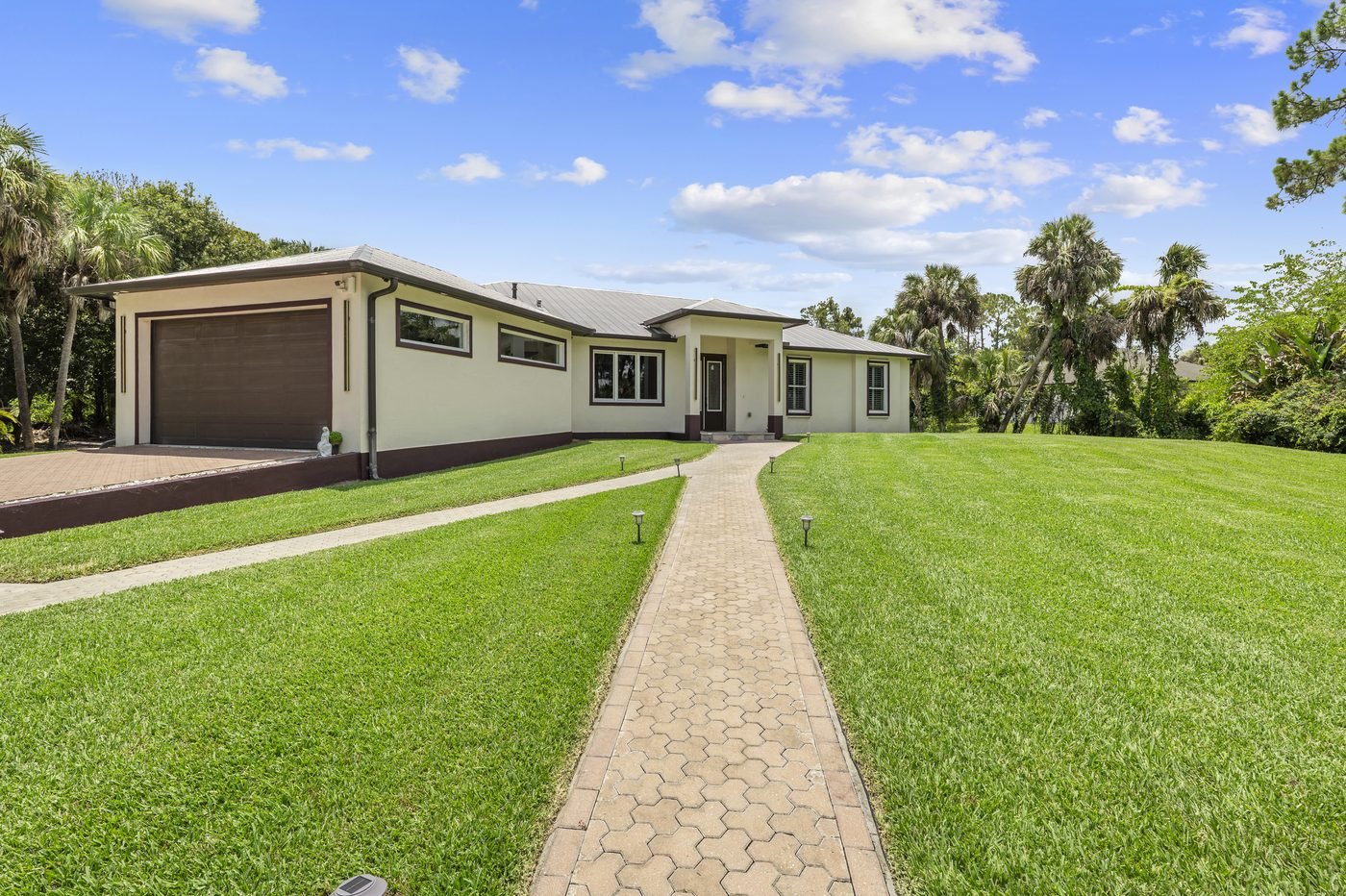
My listing at 556 6th St SE is built for exactly this. It has a 22kW whole-house generator with a 200-amp transfer switch, fed by a 500-gallon propane tank that also runs the gas kitchen. It sits behind a private gate at the end of a long, palm-lined drive on 2.81 acres that are 100% upland, with no HOA. Offered at $749,000:
- Custom-built in 2019 with a metal roof, impact glass, hurricane shutters, a tankless water heater and water softening
- Four bedrooms plus a den and two baths, about 2,154 square feet per the Property Appraiser, with dual primary suites in a split plan
- An 800-square-foot screened lanai finished in travertine with LED accent lighting
- A dedicated home theater with 7.1 surround sound, plus in-ceiling surround in the main living area
- Gated entry and a monitored security system, an oversized garage, and horses welcome
- Offered fully furnished and turnkey, with lawn, water equipment, generator monitoring and security services in place and transferable
It’s minutes from Big Corkscrew Island Regional Park, shopping, dining and healthcare. Curious what “100% upland” means? I explained it in why buyers love upland land.
Generators in the Estates: quick answers
Why does a Golden Gate Estates home need a generator?
Most Estates homes run on a private well, and the well pump needs electricity. Without power, there’s no running water, so a generator keeps the water, AC and refrigeration going after a storm.
What size generator does a whole house need?
It depends on the home and the AC system, but many whole-house standby units in this area are around 20 to 26kW. An electrician sizes it from the home’s actual load.
Do standby generators run on propane in Naples?
In the Estates, usually yes, because most properties don’t have a natural gas line. The generator draws from a propane tank on the property.
Is the propane tank included when I buy the house?
Not always. Many tanks are leased from the propane supplier. Ask whether it’s owned or leased before you close.
Want a home that’s ready for storm season?
Call or text me at (239) 289-0749 to tour 556 6th St SE, or ask me to pull Estates homes that already have a standby generator. New to buying here? Start with the complete buyer guide. Se habla español.
Join The Discussion