
100% Upland: Why Buyers Love This Golden Gate Estates Land
100% Upland: Why Buyers Love This Golden Gate Estates Land
by Magdevys “Maggie” Rodriguez October 07, 2026
When I write “100% upland” in a Golden Gate Estates listing, the phone rings. Buyers who have shopped for land out here know exactly what it means, and the ones who don’t learn fast. Two lots can be the same size on paper and be worth very different amounts, because what matters isn’t how many acres you buy. It’s how many of them you can actually use. Here’s what upland means, why it changes the value of a lot, and how to check before you buy.
Upland vs wetland, in plain English
Upland is land that isn’t classified as wetland. Wetland is decided by the soil, the plants that grow there and how long water sits on the ground, not by whether the lot looks dry on the day you walk it. A Golden Gate Estates lot can look like ordinary pines and palmettos in March and still hold protected wetland that only shows itself in August.
Plenty of Estates parcels are a mix: an upland strip near the road where the house can go, and wetland toward the back. Some are mostly wetland. A lot described as 100% upland has no wetland on it at all, so the whole parcel is available for the house, the yard, a pool, a barn or a garden.
Why it changes what a lot is worth
- Every acre is usable. On a 2.5-acre lot with an acre of wetland, you’re really buying 1.5 acres of land you can use, plus an acre you’ll look at.
- Building is simpler. Putting a house, driveway or septic system in wetland usually takes environmental permits from the state, sometimes federal permits too, and often the purchase of mitigation credits. That adds time and real money before the first block goes in. The South Florida Water Management District handles many of these permits in our area.
- More freedom later. Want to add a guest house, a workshop or a pool in five years? On upland, the question is setbacks and permits. On wetland, it may be a no.
- Easier resale. The next buyer will ask the same question you’re asking now. A clean answer helps the price hold.
How to check before you buy
- Read the listing remarks and ask the agent directly. “Is any of this lot wetland, and is there a wetland determination or a permit on file?”
- Screen it on the map. The federal National Wetlands Inventory mapper gives a quick first look. It’s a screening tool, not a final answer, so a lot that shows clean can still need a closer look.
- Look at the permit history. If a house was already permitted and built, the county and the water management district have records of what was approved and where.
- For vacant land, hire an environmental consultant. A wetland determination before closing is the only way to know exactly how much of the lot you can use. It’s worth every dollar on a land purchase, and it belongs in your inspection period.
- Walk it after a summer rain. Standing water tells you where the low ground is, whether or not it’s officially wetland.
Upland doesn’t mean every rule goes away. Clearing still needs a permit, and some native vegetation has to stay. My lot clearing guide covers that, and my flood zone guide explains the separate question of FEMA zones. If you’re buying land to build on, here’s what it really costs to build out here.
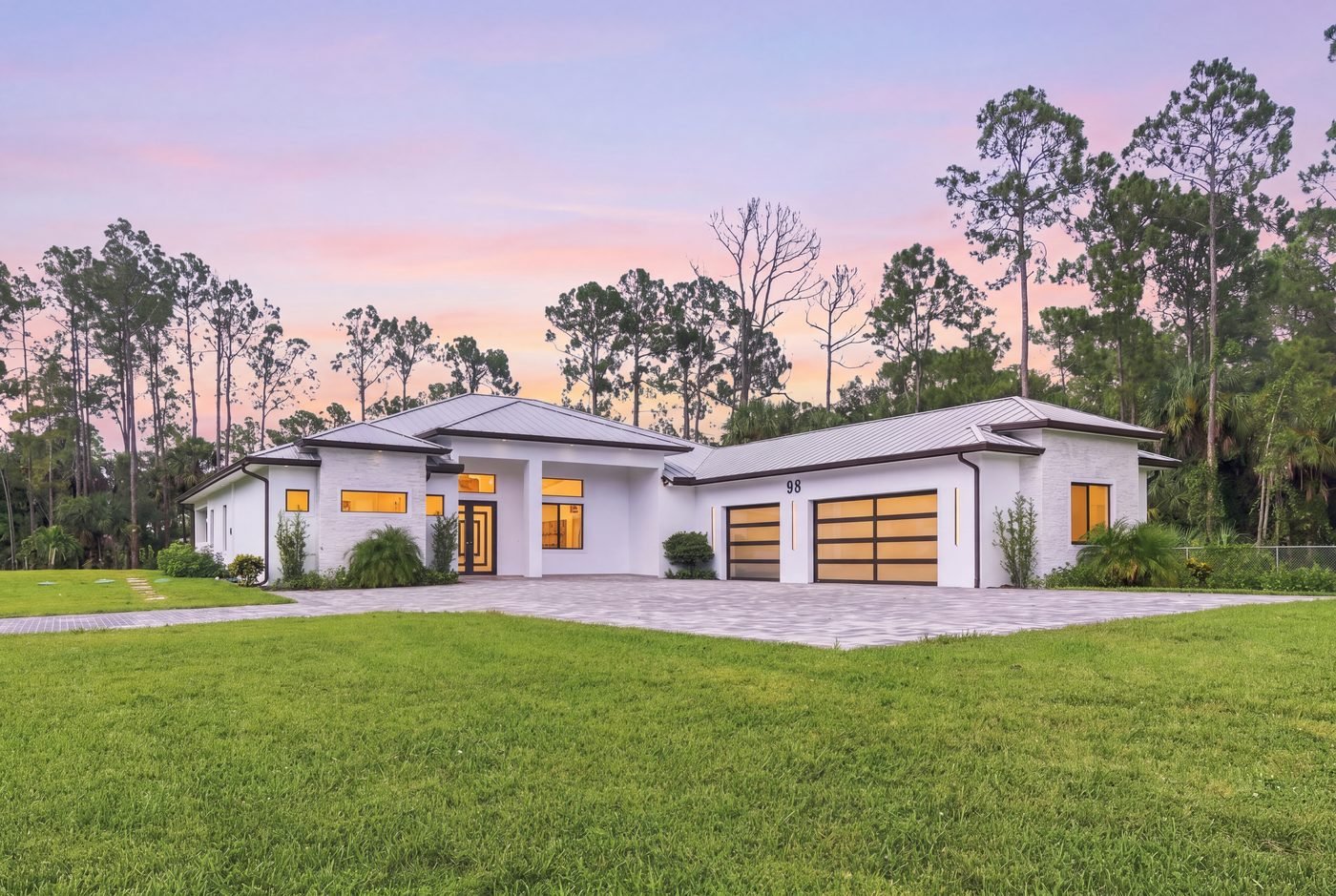
Featured home: 98 10th St NE
My listing at 98 10th St NE is a good example of what all-usable land looks like when it’s done right. It’s brand-new 2026 construction on 2.81 fully fenced acres that are 100% upland, with open lawn around the home and a wooded buffer at the back for privacy. Offered at $1,675,000:
- Five bedrooms and three and a half baths across 3,256 square feet in a split plan, plus a three-car garage with epoxy floors
- A metal roof and impact-resistant windows and doors on concrete block construction
- A kitchen made for gathering, with a waterfall island that seats five and a walk-in pantry with a beverage cooler
- A primary suite in its own wing, with two walk-in closets and a spa bath with a freestanding jetted tub and two glass showers
- A covered lanai with an outdoor kitchen, mature fruit trees, and room for a pool
- No HOA, horses welcome, a whole-house reverse osmosis system, and a corner lot just off Golden Gate Boulevard
See more of the area in my Golden Gate Estates acreage guide.
Upland land: quick answers
What does 100% upland mean?
It means the lot has no land classified as wetland, so the whole parcel can be used for the home, yard and other improvements, subject to normal setbacks and permits.
Can you build on wetland in Golden Gate Estates?
Sometimes, but it usually takes state environmental permits, possibly federal permits, and often mitigation credits. That adds time and cost, which is why upland lots tend to be worth more.
How do I find out if a lot has wetlands?
Start with the listing and the permit history, screen it on the National Wetlands Inventory mapper, and for vacant land hire an environmental consultant for a wetland determination before you close.
Does upland mean the lot won’t flood?
No. Wetland status and FEMA flood zones are separate questions. Check the flood zone and the elevation too.
Looking for land you can use?
Call or text me at (239) 289-0749 to tour 98 10th St NE, or tell me what you want to do with your land and I’ll help you find lots where every acre works. New to buying here? Start with the complete buyer guide. Se habla español.
Join The Discussion