
Golden Gate Estates Zoning: The Best Guide for Owners
Golden Gate Estates Zoning: The Best Guide for Owners
by Magdevys “Maggie” Rodriguez September 25, 2026
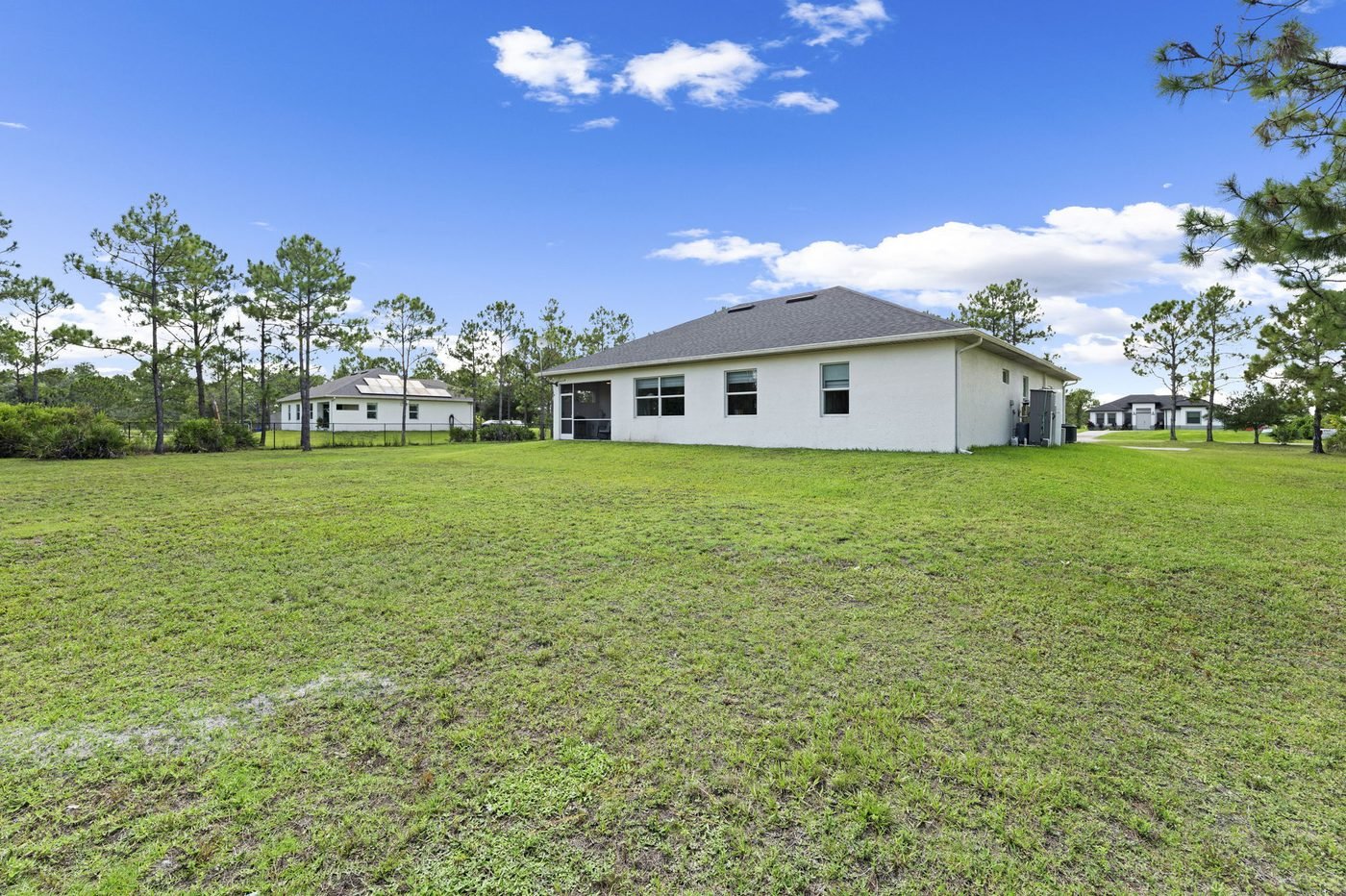
Most people buy in Golden Gate Estates for one reason: nobody tells you what to do with your land. No HOA, no architectural committee, no letter about your boat. That’s true, and it’s also incomplete. The Estates has its own rulebook, Collier County’s Estates zoning district, and knowing it is the difference between the owner who builds the barn and the owner who gets the code enforcement letter. Here’s the plain-English version of what the zoning actually lets you do.
What Estates zoning is
Nearly all of Golden Gate Estates sits in one county zoning district written for low-density, rural residential living on large lots. It’s designed around single-family homes on acreage with room for the things acreage owners want: outbuildings, animals, equipment, privacy. It is not designed for commercial use, multi-family, or dense development, and that’s exactly why the area looks the way it does. Codes get amended, and the county’s Growth Management Department is the final word on any specific parcel, so treat everything below as the map, not the survey.
Lot size and what you can build on it
- Minimum lot size. The classic Estates parcel is the 75-by-660-foot strip, a little over an acre, with larger 2.5 and 5-acre versions common. You generally can’t subdivide below the district minimum, which is why the neighborhood stays open.
- One principal home. Each lot supports one single-family residence. You can’t put two primary homes on one parcel.
- A guest house. Allowed as an accessory to the main home on qualifying lots, with a size cap tied to the principal residence, and it can’t be rented out as a separate dwelling. Full details in my guest house guide.
- Accessory structures. Detached garages, workshops, barns, sheds and pole barns are part of Estates life. They need permits, they have to respect setbacks, and they have to stay accessory to the home, meaning you can’t turn the barn into a business.
- Pools, courts and the rest. Yes, with permits. On a lot this size the limiting factor is usually where the septic drainfield sits, not the zoning.
Setbacks: the rule that shapes every Estates lot
The Estates has an unusually deep front setback compared to a subdivision, which is why homes out here sit well back from the road behind a long driveway. Side and rear setbacks are more generous too. Before you fall in love with a site plan, have your surveyor or builder overlay the setbacks on the parcel. On a narrow 75-foot lot, the side setbacks alone decide how wide the house can be, and corner lots carry a second front setback. If you’re planning a build, this is the first thing to check after the flood zone.
Animals
This is the one people ask about most. The Estates allows keeping animals in a way a subdivision never would: horses and other livestock are generally permitted on Estates lots, with limits on the number of animals that scale with lot size, and rules about where barns and enclosures can sit relative to property lines. If horses are the reason you’re moving east, confirm the current animal-per-acre limits for the specific parcel before you buy, and look at the lot’s drainage, because low ground and pasture don’t mix.
What you can’t do
- Run a commercial business from the property. Home occupations that don’t change the residential character are allowed. A contractor’s yard, a landscaping depot, or a retail operation with customer traffic generally is not, and it’s the most common complaint the county acts on.
- Split the lot below the minimum or add a second primary home.
- Clear it however you want. Native vegetation removal is regulated separately from zoning. My lot clearing guide covers the permit and the wetland and tortoise rules.
- Ignore the road. Some Estates streets sit on limited-access corridors or planned road expansions. Check the county’s long-range road plans for any lot on a major corridor.
The freedoms people underrate
No HOA means no approval needed for your fence, your paint color, your RV parked beside the garage, your boat on a trailer, your chicken coop, or your workshop. It also means the neighbor has the same freedoms, which is why buyers should drive the street at different hours before they commit. The trade is more independence for more responsibility: your own well and septic, your own drainage, your own maintenance. For most people who choose the Estates, that’s the point.
Golden Gate Estates zoning: quick answers
Can I keep horses in Golden Gate Estates?
Generally yes. Estates zoning allows livestock on residential lots, with the number of animals scaling with lot size and rules on where enclosures can sit. Confirm the current limits for the specific parcel with Collier County.
Can I build a barn, workshop or second garage?
Yes, as permitted accessory structures that meet setbacks and stay accessory to the home. You can’t operate a business out of them.
Can I run a business from my Estates property?
Home occupations that don’t change the residential character are allowed. Operations with customer traffic, outdoor storage of commercial equipment or employees on site generally aren’t, and they draw complaints.
Can I split my Estates lot?
Usually not below the district minimum lot size. That rule is what keeps the Estates low-density, and it means the acreage you buy is the acreage you’ll have.
Know the rules before you plan the property
If you’re buying in the Estates with a barn, a shop, horses or a guest house in mind, call or text me at (239) 289-0749 before you write the offer. I’ll walk the parcel with you and flag what the zoning, the setbacks and the ground will actually allow. Start with the acreage guide. Se habla español.
Your next step: search every home for sale in Naples, check the latest Naples market report, or if you are thinking of selling, find out what your home is worth and read my guide to selling in Naples.


Join The Discussion