
Room for a Pool? The 5 Checks I Make Before Buyers Fall in Love
Room for a Pool? The 5 Checks I Make Before Buyers Fall in Love
by Magdevys “Maggie” Rodriguez October 05, 2026
“Room for a pool” might be the most hopeful three words in a Naples listing. Buyers read it and picture the finished backyard: water, a screen cage, a sunset swim. Sometimes that’s exactly what you get. Other times the pool ends up smaller, pricier or in a different spot than you imagined, because of things nobody checked before closing. A home without a pool can be a great buy, and adding one later lets you build exactly what you want. These are the five checks I make with buyers before they fall in love with the idea.
Check 1: where would it actually go?
Start with the survey, not the backyard view. Pools and screen enclosures have to respect setbacks from the property lines, and they generally can’t sit on top of a drainage or utility easement. On a small subdivision lot that can shrink the buildable area fast. On a Golden Gate Estates acreage lot there’s usually plenty of room, but the house position, the driveway and the trees still decide where the pool fits best. Look at which way the back of the house faces too, since that sets how much sun the water gets.
Check 2: find the septic and the well
On homes with a septic system and a private well, this is the one that changes plans. Florida’s septic rules require separation between the system and a pool, and heavy equipment can’t drive over the drainfield without damaging it. Ask for the septic permit and the as-built drawing, which show where the tank and drainfield sit, and note the well location before you sketch a pool. My well and septic guide explains what to ask for.
Check 3: can the equipment get in?
An excavator, a dump truck and a concrete pump all need a path to the backyard. On an acreage lot with a side drive that’s easy. On a tight city lot, a narrow side yard, a fence or a mature tree can mean extra cost, or a smaller machine and a longer job. Walk the route with the pool builder before you buy, not after.
Check 4: permits and the safety rule
A new pool needs a county building permit, and in a community with an HOA it usually needs architectural approval first, which can add weeks. Florida’s Residential Swimming Pool Safety Act also requires every new residential pool to have at least one approved safety feature: a barrier such as a fence or screen enclosure, an approved safety cover, exit alarms on the doors that open to the pool, self-closing and self-latching doors, or a pool alarm. Most Naples owners choose a screen enclosure, which also keeps out leaves and bugs. In the Estates there’s no HOA approval to wait on, though the county permit still applies. My Estates zoning guide covers the rest of the rules.
Check 5: the whole budget, not just the pool
The pool shell is only part of the bill. Ask every builder for an itemized quote that includes the screen enclosure, the deck, the pump and filter equipment, a heater if you want to swim in January, electrical work, the permit and the landscaping repair. Get at least two quotes. Then call your insurance agent, because a pool adds liability coverage and many policies treat screen enclosures differently from the house. More on that in my insurance guide. A pool is also an improvement the Property Appraiser will add to the assessed value, so plan on a higher tax bill.
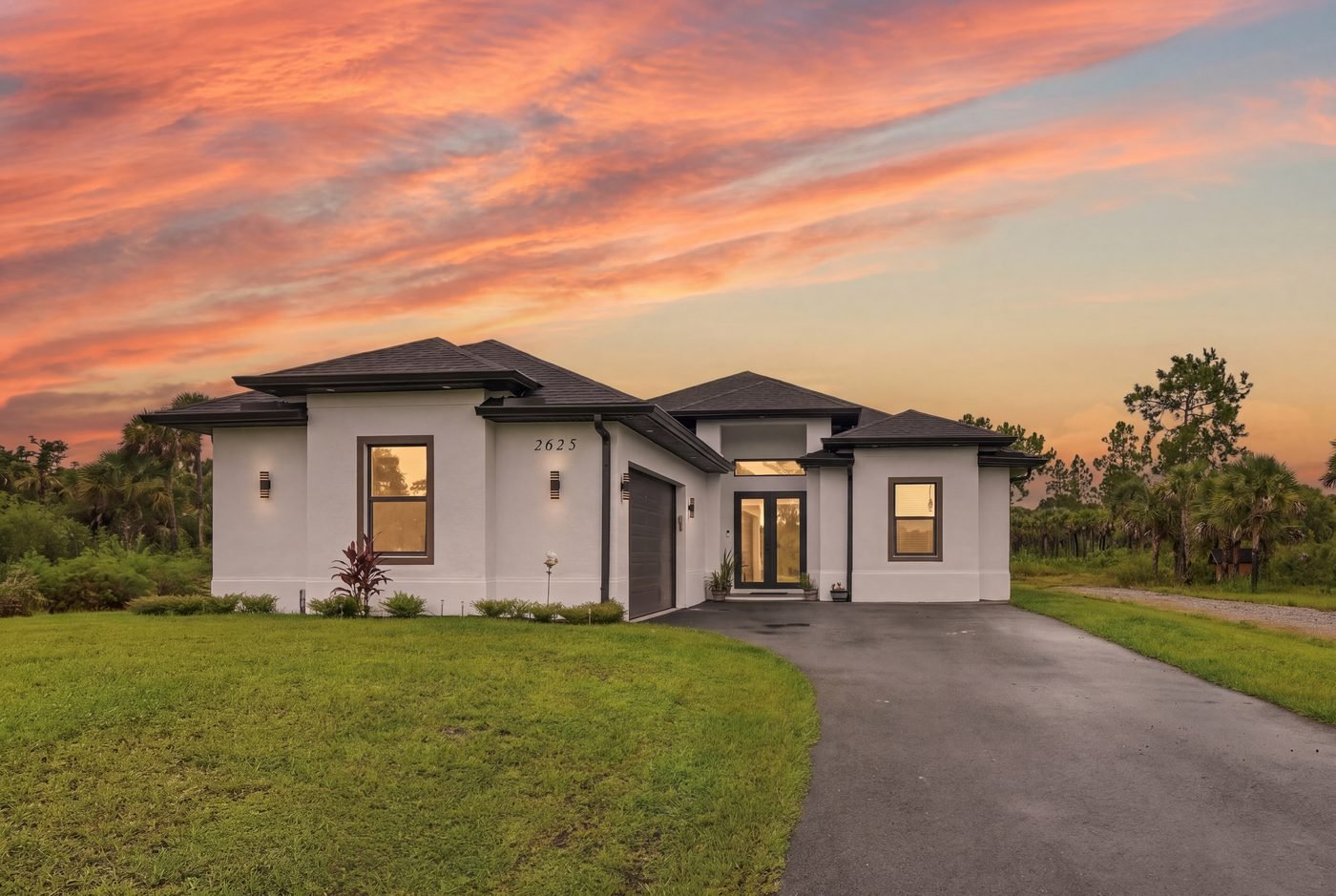
Featured home: 2625 32nd Ave SE
My newest listing is a good example of a home ready for one. It’s brand-new 2026 construction on 2.50 private acres in Golden Gate Estates, with no HOA, an open lanai and patio, and plenty of open lawn behind the house for a future pool. Offered at $665,000:
- Three bedrooms plus a den and two full baths in a split plan, about 1,936 square feet per the Property Appraiser
- 11-foot ceilings in the living and dining areas and a 14-foot entry
- A large island kitchen with a breakfast bar and a reverse osmosis system
- Concrete block construction with impact-resistant windows and doors
- A finished floor about 2.5 feet above base flood elevation, which is worth understanding before you shop for insurance. Here’s why that matters in the Estates
- Horses welcome, an attached two-car garage, well and septic, and a county-maintained paved road
Thinking of building instead? My cost-to-build guide compares the two paths.
Room for a pool: quick answers
What does “room for a pool” mean in a listing?
It means the seller believes the lot has space for a pool, but it isn’t a guarantee. Setbacks, easements, the septic system and equipment access decide whether a pool fits and how big it can be. Check the survey before you rely on it.
Do I need a permit to add a pool in Collier County?
Yes. A new pool needs a county building permit, and homes in HOA communities usually need architectural approval too.
Does Florida require a fence or screen around a new pool?
Florida requires every new residential pool to have at least one approved safety feature: a barrier such as a fence or screen enclosure, an approved safety cover, door exit alarms, self-closing and self-latching doors, or a pool alarm. Most Naples owners choose a screen enclosure.
Can I put a pool on a home with a septic system?
Usually, as long as the pool keeps the required distance from the septic tank and drainfield and construction equipment stays off the drainfield. Get the septic as-built drawing before you plan the pool.
Let’s walk the backyard together
If a pool is on your wish list, call or text me at (239) 289-0749 to tour 2625 32nd Ave SE, or any home with room for one. I’ll bring the survey and we’ll figure out where the pool would really go. New to buying here? Start with the complete buyer guide. Se habla español.
Join The Discussion